Corrugated board is the backbone of the global shipping and packaging industry. Understanding its structure, types, and manufacturing processes is essential for businesses to choose the right packaging solutions that balance cost, protection, and sustainability.
Corrugated Flute Shapes
Corrugated board flutes are generally categorized into three shapes: U-shaped, V-shaped, and UV-shaped.
- U-shaped: Features a rounded top, offering good recovery and bonding strength.
- V-shaped: Has a sharper top, providing high stiffness but lower recovery.
- UV-shaped: A hybrid shape that combines the characteristics of both U and V shapes, offering high compressive strength and strong recovery.
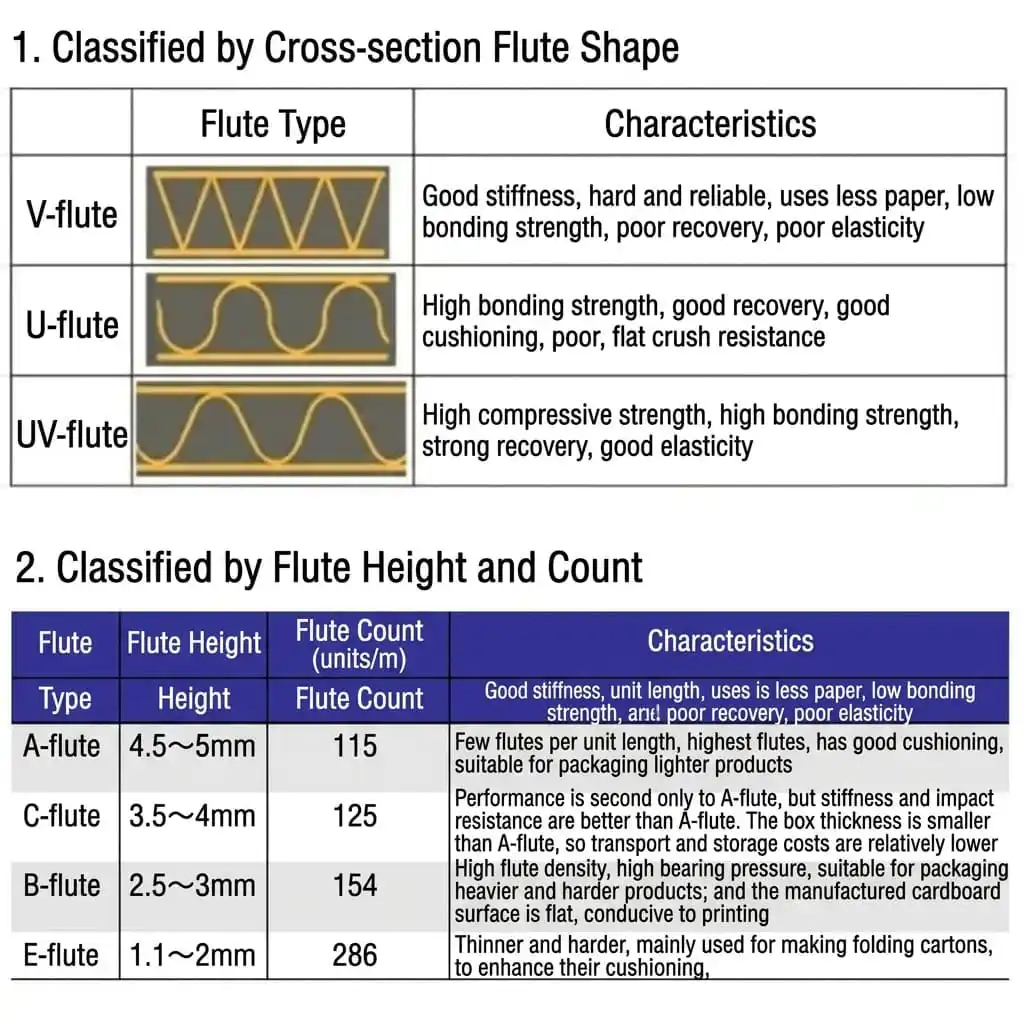
Classified by Cross-section Flute Shape
The arched ripples of the corrugation function as a series of connected arches. They form a stable triangular structural system with excellent mechanical strength, providing high elasticity and cushioning to protect contents from collisions and drops during transportation.
Flute Categories and Characteristics
Corrugated board is classified into six standard categories based on the flute profile: A, B, C, D, E, and F. As the letters progress from A to F, the overall thickness of the board decreases.
Performance Comparison (A, B, and C Flutes)
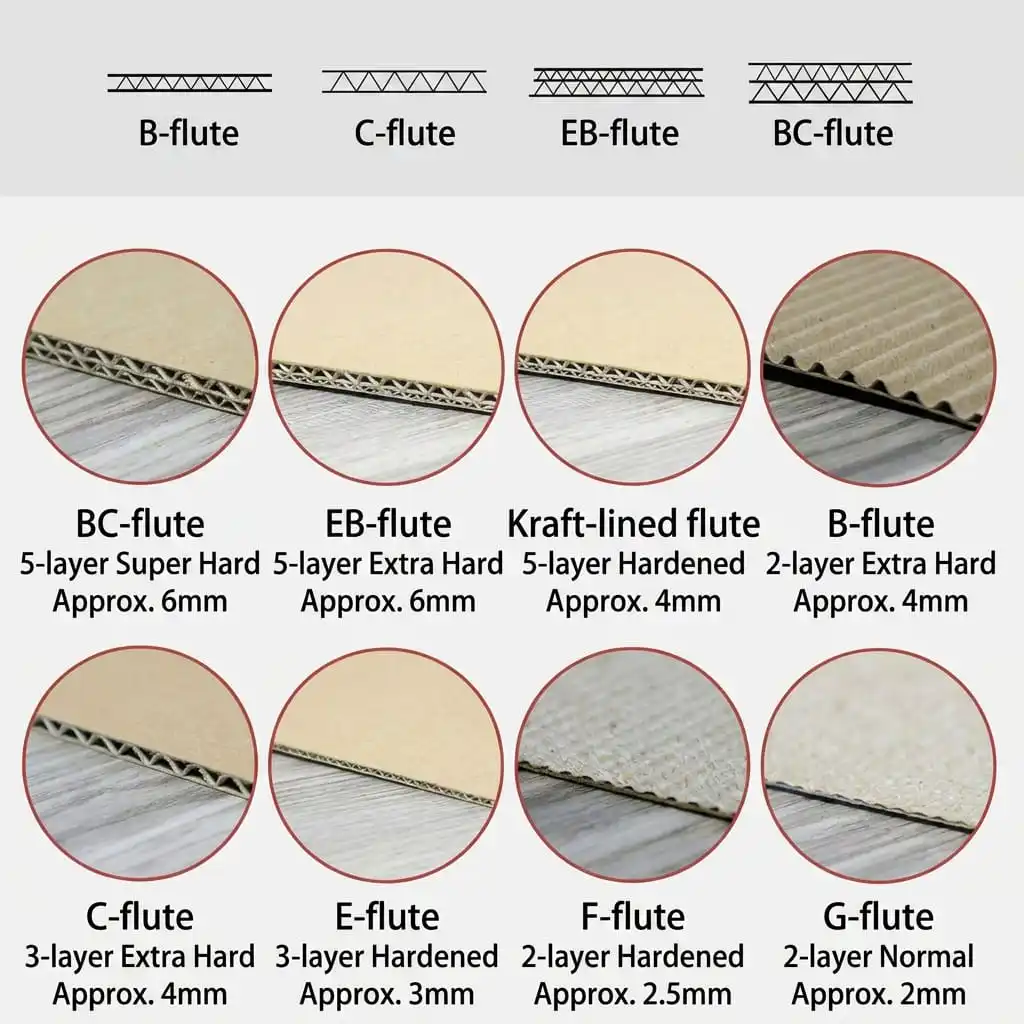
The choice of flute depends on the required performance:
- Flat Crush Resistance & Printing Suitability: B-flute performs best due to its flatter surface, making it ideal for high-quality printing.
- Vertical Compression & Cushioning Capacity: A-flute is superior, providing the best protection for heavy or fragile items that require high stacking strength.
Typically, single-wall board uses A or C flutes, while double-wall board uses combinations like AB or BC to balance strength and cushioning.
Board Structures by Layer
Corrugated board is categorized by the number of paper layers:
- Single-Face: One liner bonded to one fluted medium. Often used for wrapping.
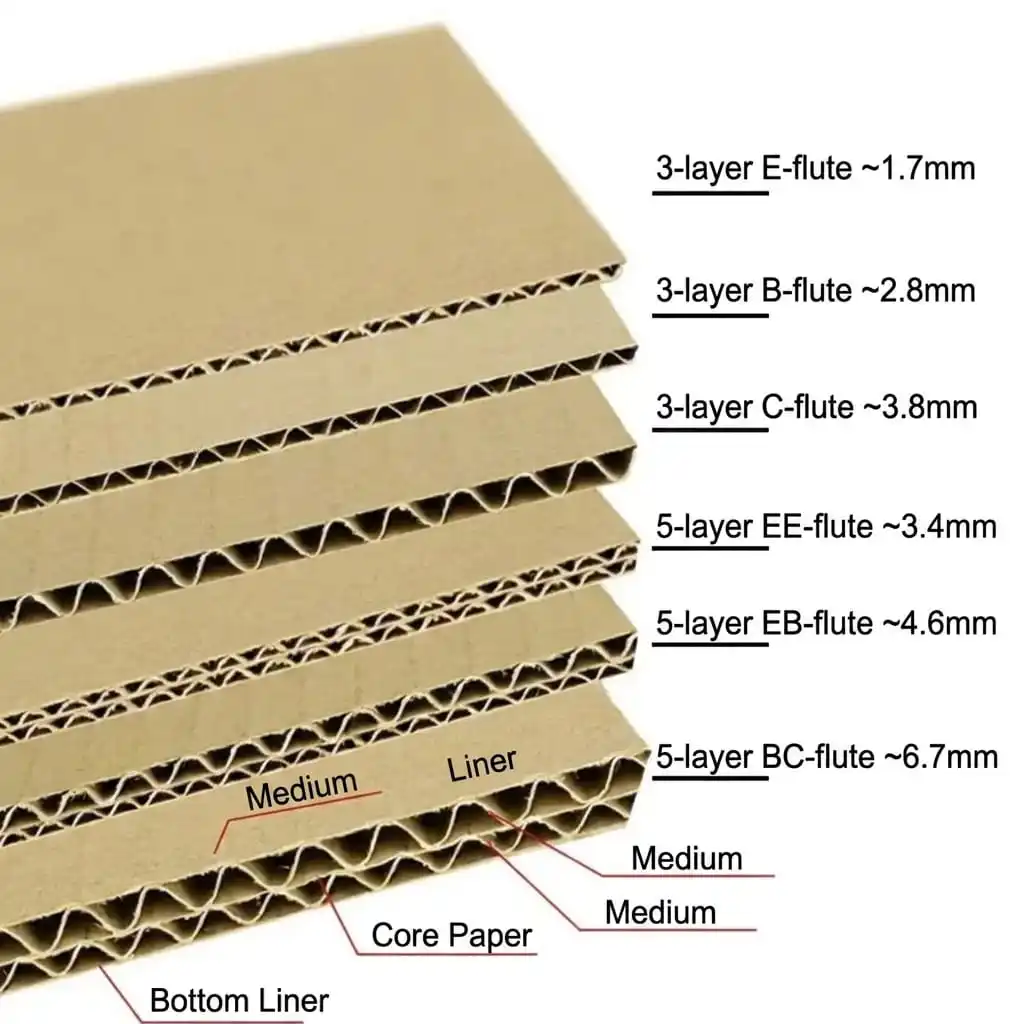
- Three-Layer (Single-Wall): One fluted medium sandwiched between two liners.
- Five-Layer (Double-Wall): Two fluted mediums and three liners.
- Seven-Layer (Triple-Wall): Three fluted mediums and four liners, used for heavy-duty industrial packaging.
Common Flute Combinations
- AB-Flute: ~7mm thick. Used for heavy items like air conditioners.
- CB-Flute: ~6mm thick. Used for large appliances and electronics.
- BE-Flute: ~4.5–5mm thick. Suitable for express parcels and digital products.
Standard Thickness Reference
The following are common thickness standards for different board types:
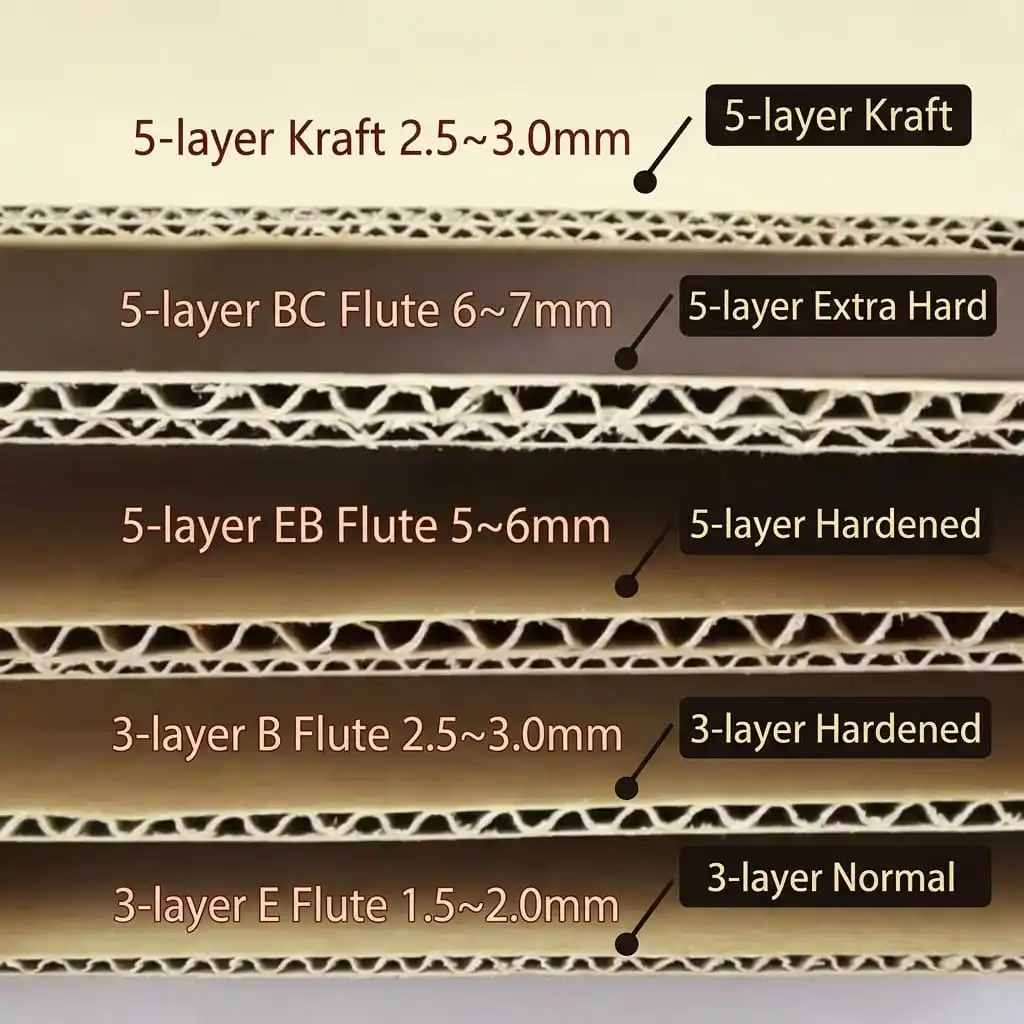
- Single-wall E-flute: 1.5–2.0 mm
- Single-wall B-flute: 2.5–3.0 mm
- Double-wall EB-flute: 5.0–6.0 mm
- Double-wall BC-flute: 6.0–7.0 mm
- Triple-wall board: 9.0–10.0 mm
The Manufacturing Process
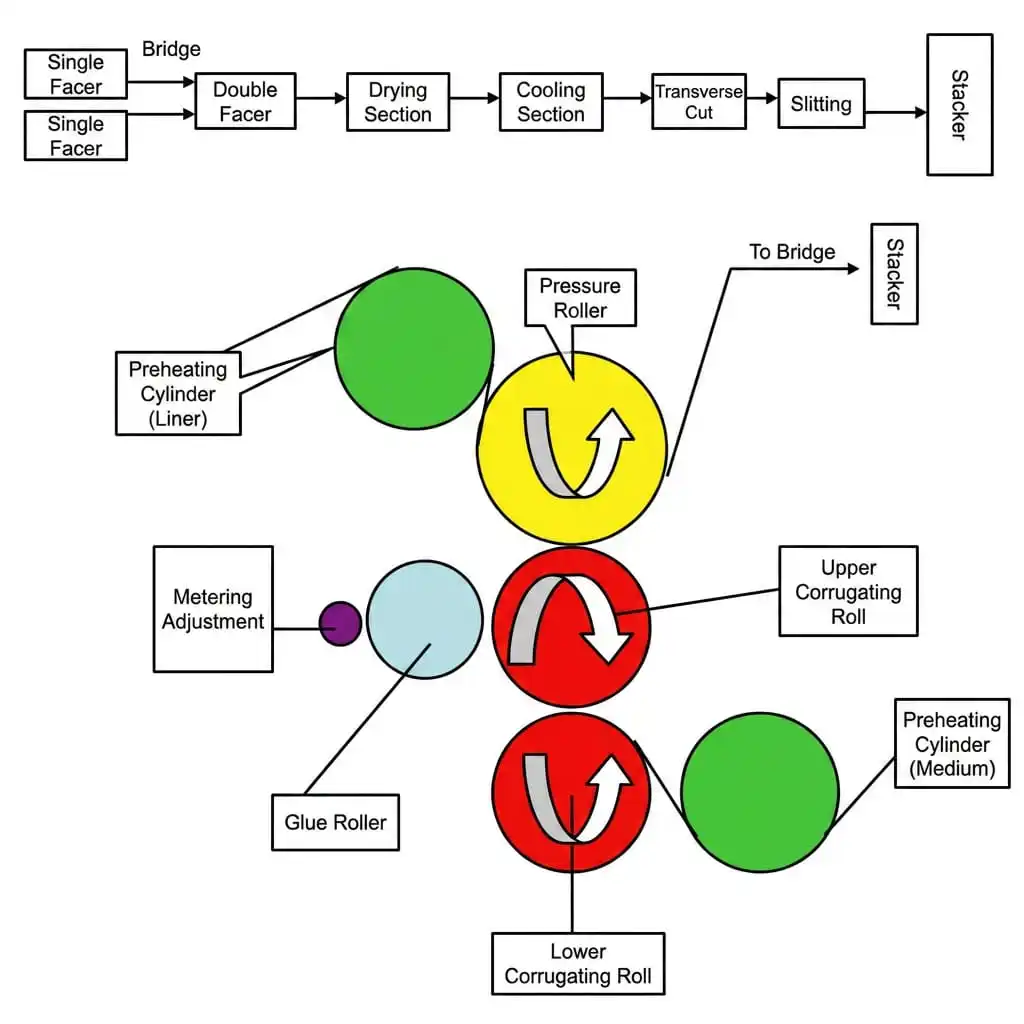
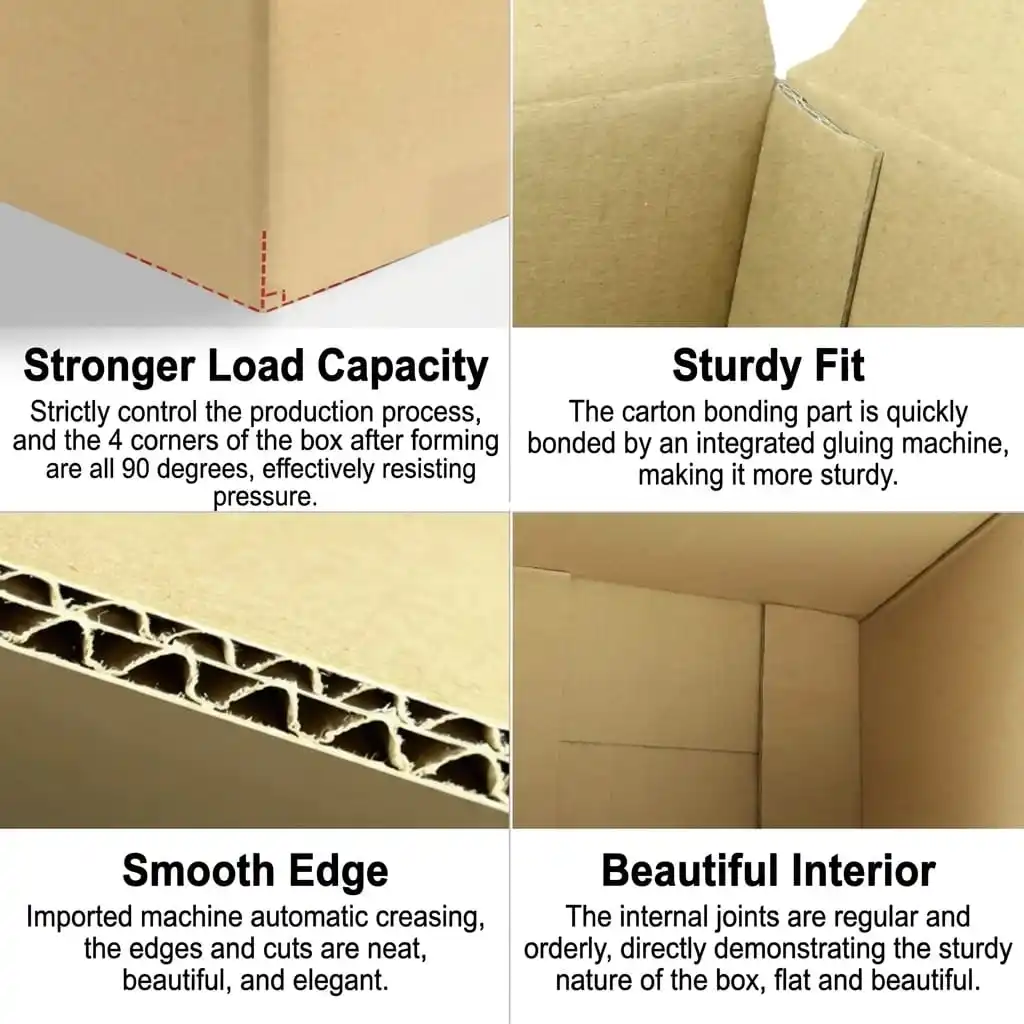
The production of corrugated boxes involves three primary stages: Box Forming, Pattern Printing, and Joining & Bonding.
Quality Control and Testing
To ensure durability, boxes undergo rigorous performance testing for edge crush strength, bursting strength, puncture resistance, and stacking strength.
Material Composition
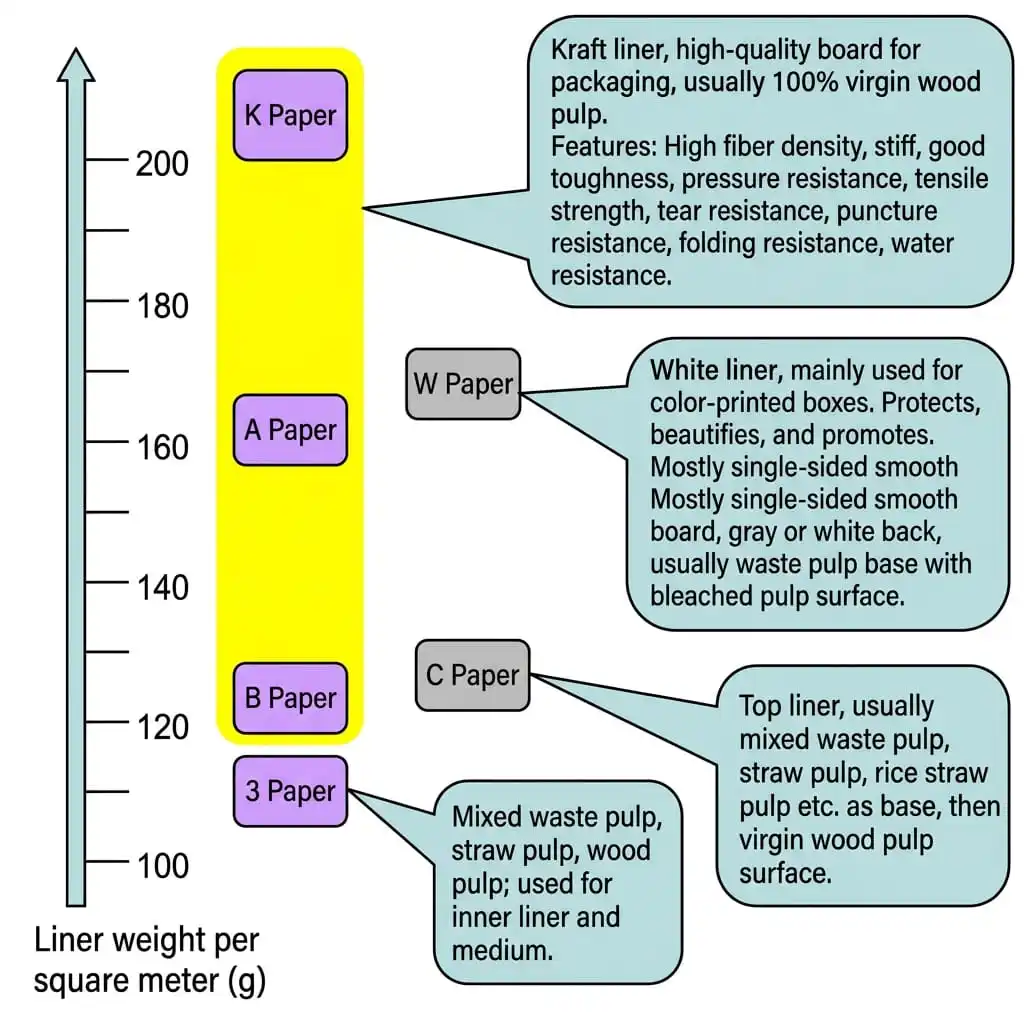
Corrugating medium is typically produced from groundwood pulp, semi-chemical pulp, or recycled waste paper pulp. Modern high-quality production often utilizes a blend of semi-chemical and recycled pulps for improved strength and environmental sustainability.